
Birdwatching Gear: Binoculars & Essentials
You only need a few things to enjoy birdwatching — and binoculars matter most. Learn what the numbers mean, what to prioritize, and which pairs suit your budget.
Build My Starter Kit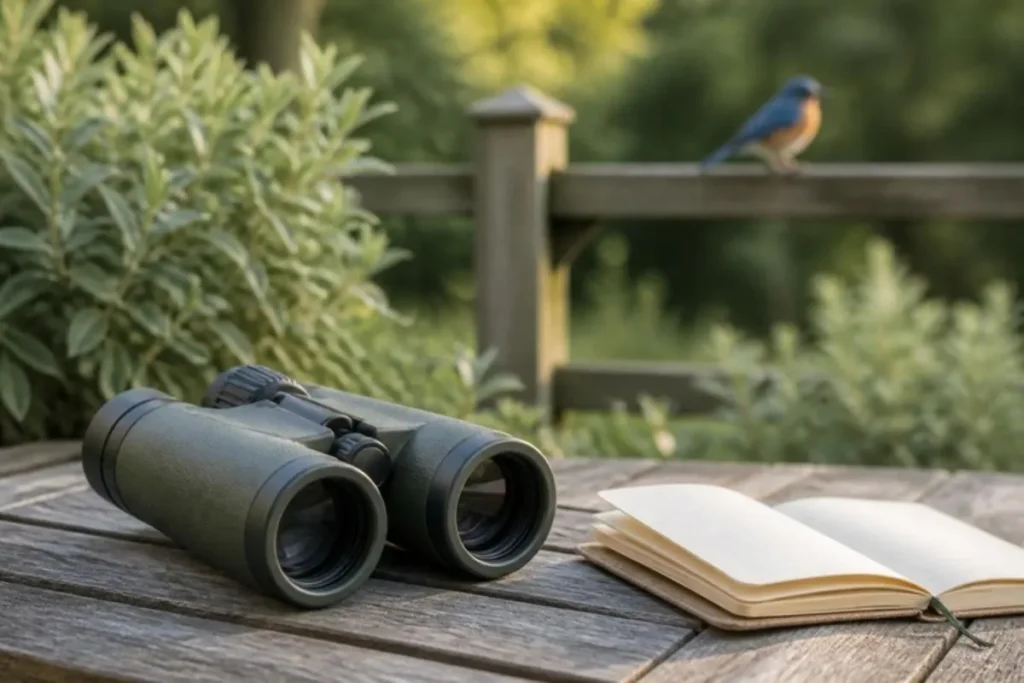
Binocular numbers, explained
Binoculars are labeled with two numbers, such as 8×42. The first is magnification (8 times closer); the second is the diameter of each front lens in millimeters. Bigger lenses gather more light but add weight.
- 8x is the birding sweet spot. It gives a wider, steadier view than 10x, which makes finding and following birds much easier.
- 42 mm vs 30–32 mm. 8×42 is brighter in dim light; 8×30/8×32 is lighter to carry all day.
- Field of view. A wider field (often given in feet at 1,000 yards) helps you find birds quickly.
- Close focus. How near you can focus. Under about 6–8 feet is great for backyard birds and butterflies.
- Eye relief. Glasses wearers should look for roughly 15 mm or more and twist-up eyecups.
- Glass and coatings. “Fully multi-coated” lenses, phase-coated roof prisms and ED glass improve brightness, contrast and color.
- Waterproof and fogproof. Nitrogen- or argon-purged bodies prevent internal fogging.
Other essentials
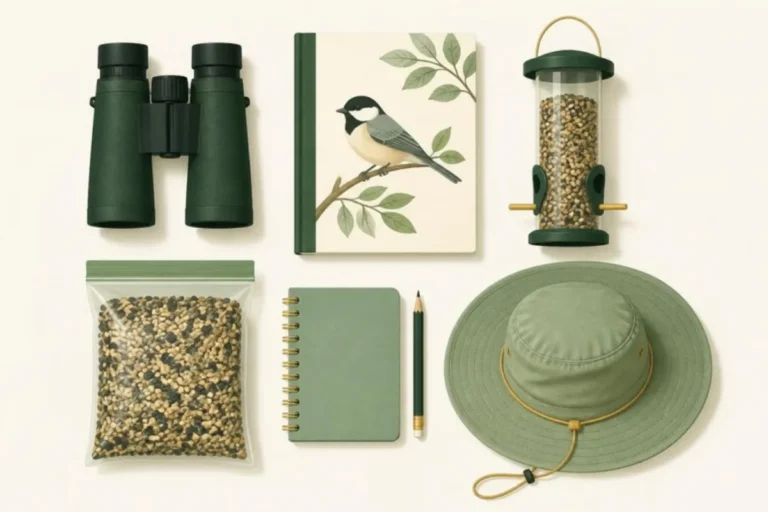
- A field guide or app. Pair a regional guide with the free Merlin Bird ID app from the Cornell Lab.
- A notebook. Logging what you see builds skills fast; eBird lets you share sightings with science.
- A harness or comfortable strap. Takes the weight of binoculars off your neck on long walks.
- Spotting scope (optional). Useful for distant water birds and shorebirds once you’re hooked.
Binoculars worth considering
Chosen from manufacturer specifications across budgets. We haven’t lab-tested them — see our editorial policy.
| Product | Best for | Key features | Considerations | Shop |
|---|---|---|---|---|
| Nikon MONARCH M5 8×42Nikon | A step-up pair with ED glass for sharper, cleaner color |
|
| Check Price (opens Amazon in a new tab) |
| Vortex Diamondback HD 8×42Vortex Optics | All-round birding with a short close focus and lifetime warranty |
|
| Check Price (opens Amazon in a new tab) |
| Celestron Nature DX 8×42Celestron | Budget-friendly first binoculars for beginners |
|
| Check Price (opens Amazon in a new tab) |
| Nikon PROSTAFF P3 8×30Nikon | Compact, lightweight binoculars for travel and kids |
|
| Check Price (opens Amazon in a new tab) |
Frequently asked questions
Are 10x binoculars better for birdwatching than 8x?
Not usually for beginners. 10x shows more detail on distant birds, but the narrower, shakier view makes birds harder to find and follow. Most birders start with 8x.
How much should I spend on binoculars?
Good beginner binoculars with phase-coated prisms and waterproofing are available at modest prices. Spending more mainly buys better glass (such as ED), sharper edges and better low-light performance. Check current prices on the retailer’s site.
Can I use binoculars with glasses?
Yes. Twist the eyecups down and choose a model with long eye relief — roughly 15 mm or more.