
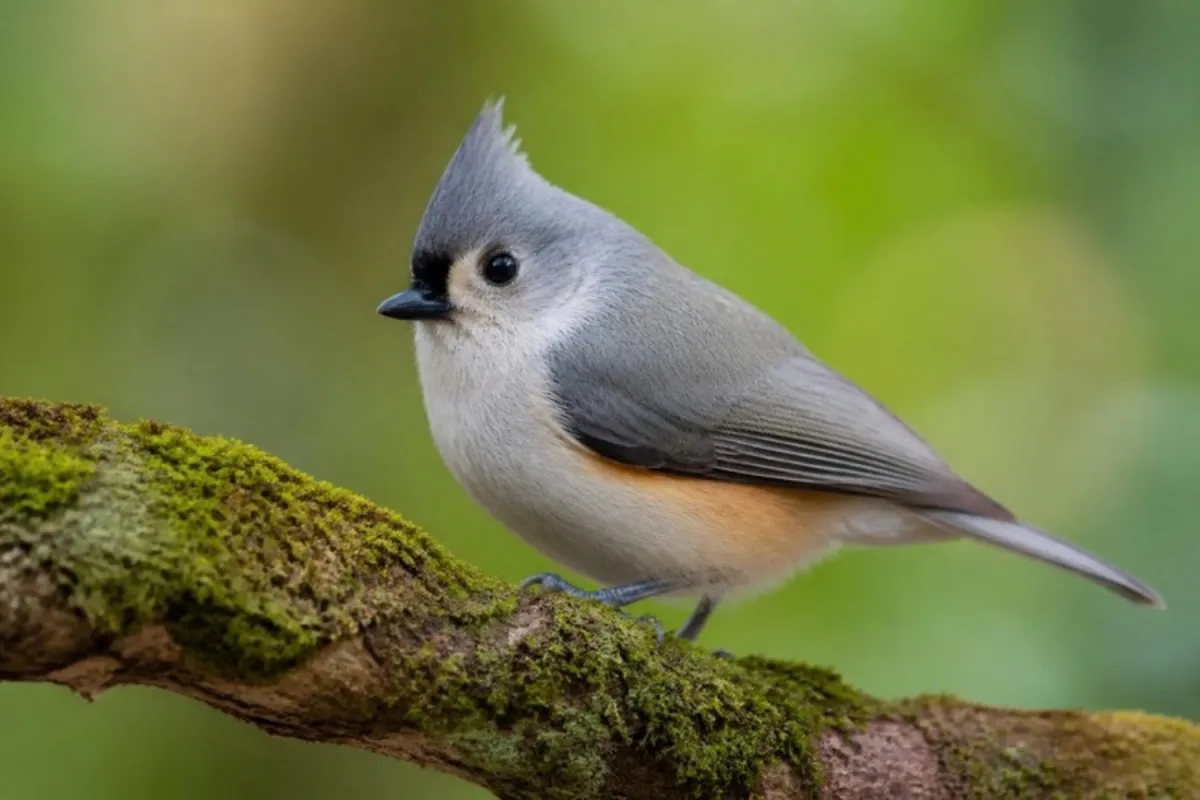
Birding has its own vocabulary. Search or browse 60+ common terms — from field marks to birder slang — explained in plain English.
- ABA Area
- The area covered by the American Birding Association for its bird lists, encompassing North America north of Mexico.
- Accidental
- A bird observed outside its normal geographic range; a vagrant.
- Alcid
- A family of diving seabirds that includes auks, murres, and puffins.
- Altricial
- Birds hatched in a helpless condition, often naked and with eyes closed, requiring significant parental care.
- Avifauna
- The birds of a particular region, habitat, or geological period.
- Baffle
- A dome or cylinder fitted above or below a feeder to stop squirrels and other climbers from reaching it.
- Beak
- The bill of a bird, composed of jaws covered by a horny sheath.
- Binoculars
- Handheld optics for viewing distant birds. Described by two numbers, e.g. 8x42: 8x magnification and 42 mm objective lenses.
- Brood
- A group of young birds hatched at one time and cared for by the same parents.
- Brood Parasite
- A bird that lays its eggs in the nest of another species, which then raises the young.
- Call
- A short, simple vocalization used for communication, distinct from a song.
- Canopy
- The upper layer of a forest, formed by the crowns of trees.
- CBC
- Christmas Bird Count, an annual census of birds conducted by volunteers.
- Close focus
- The nearest distance at which binoculars can focus — shorter is better for nearby birds and butterflies.
- Colony
- A group of birds nesting or roosting together in a specific location.
- Corvid
- A member of the crow family (Corvidae), which includes crows, ravens, jays, and magpies.
- Coverts
- Small feathers that cover the bases of larger feathers on the wings and tail.
- Crepuscular
- Active primarily during twilight (dawn and dusk).
- Crest
- A tuft of feathers on the head of a bird.
- Cryptic
- Plumage that provides camouflage, helping a bird blend in with its environment.
- Digiscoping
- Taking photos or video by holding or mounting a phone or camera behind a spotting scope or binoculars.
- Diurnal
- Active during the day.
- eBird
- A free online database run by the Cornell Lab of Ornithology where birders log sightings; the data supports research and conservation.
- Endemic
- A species found exclusively in a particular geographic area.
- Extirpated
- Locally extinct; no longer found in a specific area but still existing elsewhere.
- Eye-ring
- A ring of contrasting feathers or bare skin around a bird’s eye — a useful field mark.
- Field mark
- A visible feature, such as a wing bar, eye-ring or tail pattern, that helps identify a species.
- Fledge
- To leave the nest. A fledgling is a young bird that has recently left the nest — often before it can fly well — and is still fed by its parents.
- Flyway
- A major route that migratory birds follow.
- Forage
- The act of searching for food.
- Gape
- The interior of the open mouth of a bird.
- Gregarious
- Living in flocks or communities.
- Habitat
- The natural environment in which a species lives.
- Hybrid
- The offspring of two different species.
- Irruption
- An irregular migration of a large number of birds to an area where they are not typically found.
- Jizz
- The overall impression or character of a bird, including its shape, posture, and movement, used for identification.
- Lek
- A communal display area where males of a species gather to perform courtship rituals for females.
- Lifer
- The first time a birder sees a particular species.
- Lore
- The area between the eye and the bill on the side of a bird’s head.
- Migration
- The seasonal movement of birds from one region to another.
- Mobbing
- A behavior where smaller birds cooperatively attack or harass a predator.
- Molt
- The process of shedding and replacing feathers.
- Morph
- A distinct color or pattern variation within a single species.
- Nape
- The back of the neck.
- Nocturnal
- Active at night.
- Nyjer
- A small, oil-rich black seed (often called thistle) favored by goldfinches and other finches.
- Passerine
- A member of the order Passeriformes, known as perching birds or songbirds, characterized by a toe arrangement of three forward and one back.
- Patch
- A distinct area of color on a bird’s plumage or a small area of a particular habitat.
- Pelagic
- Relating to the open sea; a bird that lives over the open ocean.
- Plumage
- A bird’s entire set of feathers.
- Precocial
- Birds that are relatively mature and mobile from the moment of hatching.
- Primaries
- The long outer flight feathers of the wing, attached to the bird’s “hand.”
- Raptor
- A bird of prey, such as a hawk, eagle, or falcon.
- Roost
- A place where birds settle to rest or sleep.
- Scrape
- A simple nest consisting of a shallow depression in the ground.
- Song
- A longer, more complex vocalization used mainly to defend territory and attract a mate. In many North American songbirds mostly males sing, though females of some species sing too.
- Spark bird
- The bird that first sparked someone’s interest in birdwatching.
- Suet
- High-energy animal fat, often mixed with seeds, offered to woodpeckers, nuthatches and chickadees.
- Supercilium
- A stripe above a bird’s eye, also called an eyebrow stripe.
- Twitcher
- A birder who is willing to travel long distances to see a rare bird.
- Vagrant
- A bird found outside its expected range; an accidental.
- Wing bar
- A pale stripe across the folded wing formed by contrasting tips of the covert feathers.
No matching terms. Try a shorter word, or browse the full list.