
How to Attract Birds to Your Backyard
Birds need four things: food, water, shelter and safe places to nest. Offer all four and you’ll see more species — including birds that never visit feeders.
Plan My Feeder Setup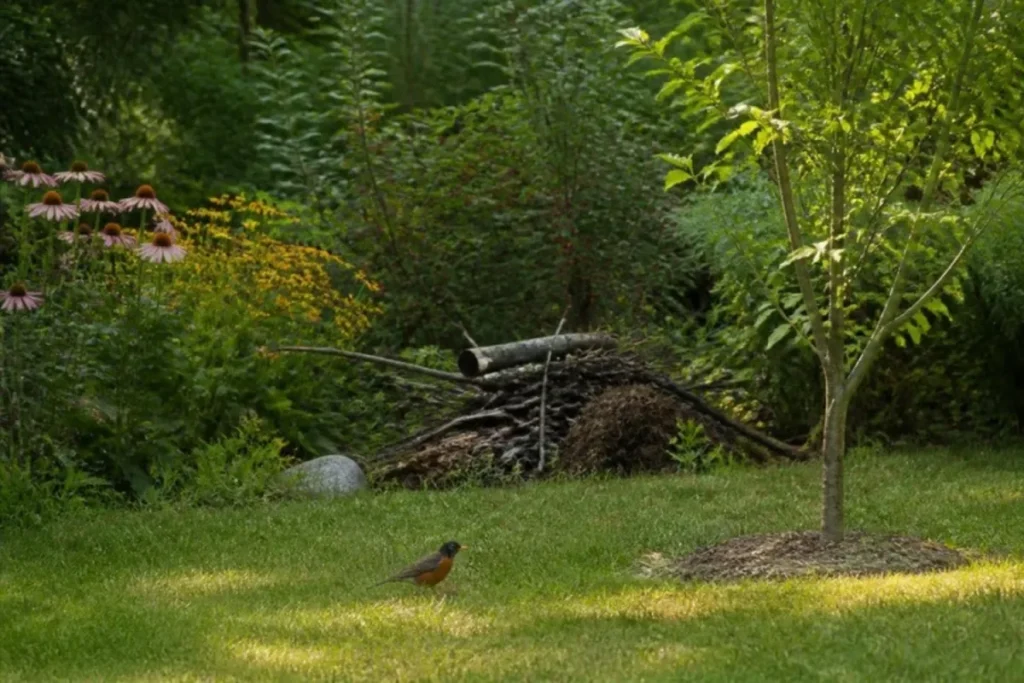
1. Food: feeders and native plants
Feeders bring birds close, but native plants feed far more species year-round with seeds, berries and the insects that baby birds depend on. Leave some seed heads standing in fall, and choose native shrubs that fruit at different times of year. Your local native plant society or extension office can suggest species for your region.
For feeders, start with black-oil sunflower seed in a tube or hopper feeder, and add suet in cold weather. See what to feed which birds.
2. Water: often the missing piece
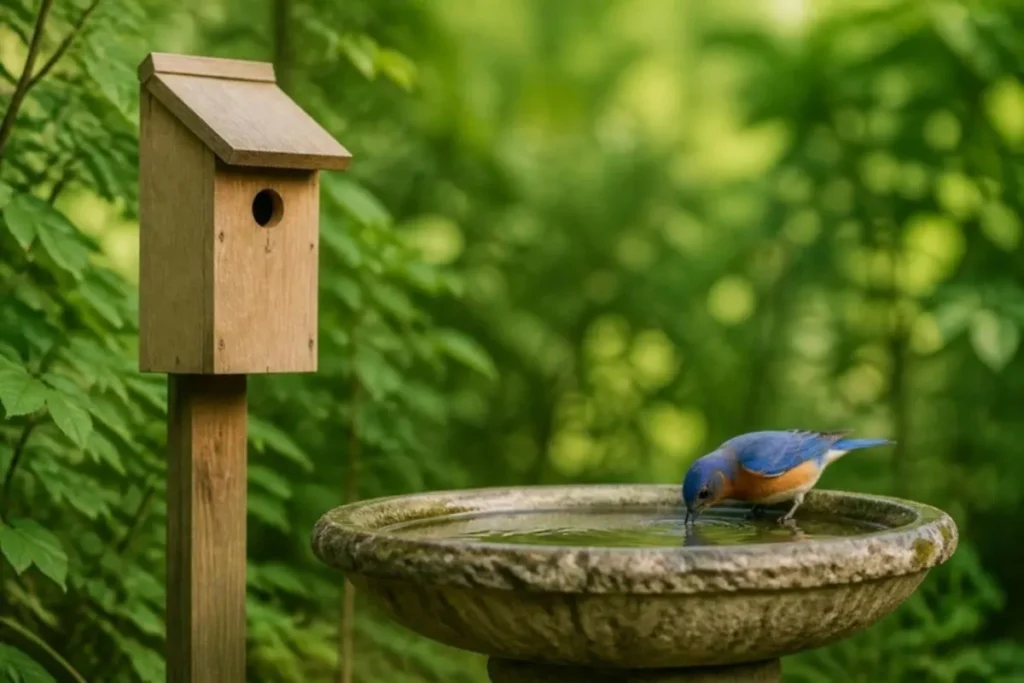
- Use a shallow bath — 1 to 2 inches deep with a gently sloping edge, or add flat stones.
- Moving water (a dripper or small bubbler) attracts attention from a distance.
- Refresh water every day or two and scrub the bath weekly to prevent algae and disease.
- In freezing weather, a thermostatically controlled heated bath keeps water open. See our heated bird bath guide
3. Shelter: layers and cover
Birds feel safest when they can dash into cover. Aim for layers: tall trees, mid-height shrubs, and ground cover or a brush pile. Evergreens provide winter protection from wind and predators. Keep feeders roughly 10 feet from dense cover — close enough for escape, far enough that cats can’t ambush.
4. Nesting: boxes and safe spaces
- Put up nest boxes before breeding season begins, sized for the species you want (hole size matters).
- Add predator guards and avoid perches on the front of boxes.
- Mount boxes away from busy feeders.
- Clean out old nests after the season, following local guidance.
- Avoid pruning shrubs and hedges while birds are nesting. Most native birds, nests and eggs are protected under the Migratory Bird Treaty Act in the US.
Keep birds safe
- Windows: add exterior markings to large windows and place feeders within 3 ft or beyond 30 ft.
- Cats: keep them indoors; outdoor cats kill huge numbers of birds each year.
- Pesticides: avoid them where possible — they reduce the insects birds need.
- Hygiene: clean feeders and baths regularly.
Attract specific birds
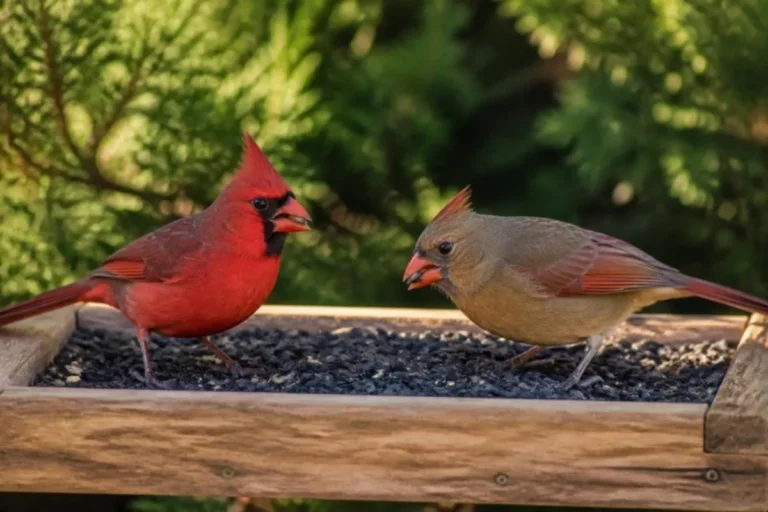 How to Attract CardinalsFood, feeders and cover cardinals prefer.Read
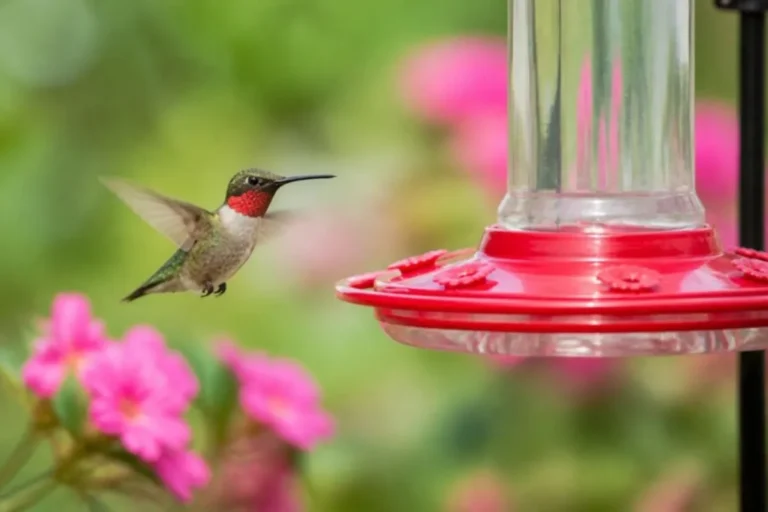 Attract HummingbirdsNectar feeders, flowers and cleaning schedules.Read
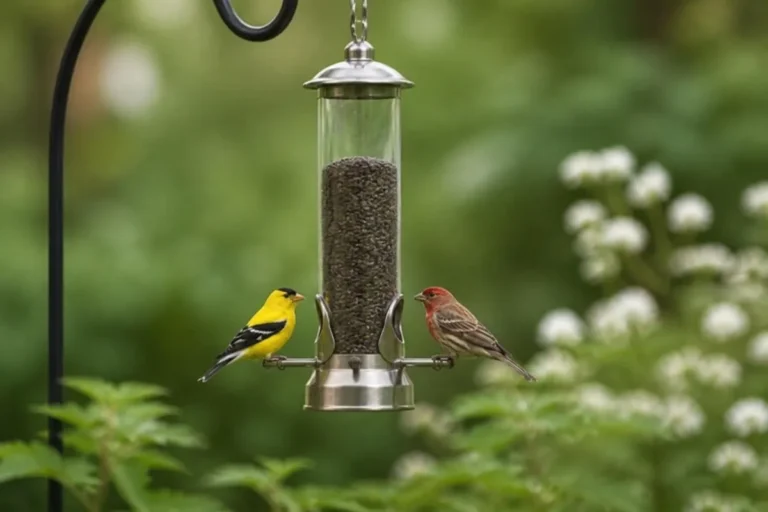 Attract Finches & ChickadeesStart with tube feeders and the right seed.Read
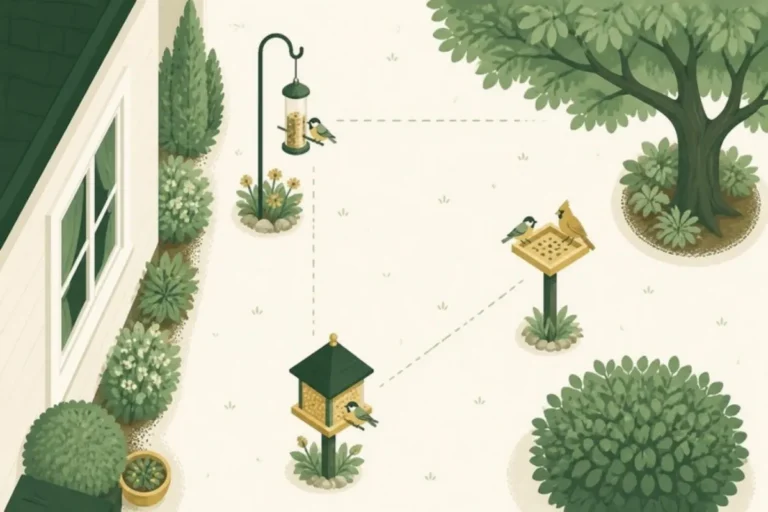 Bird Feeder PlacementWhere to put feeders for safety and views.Read
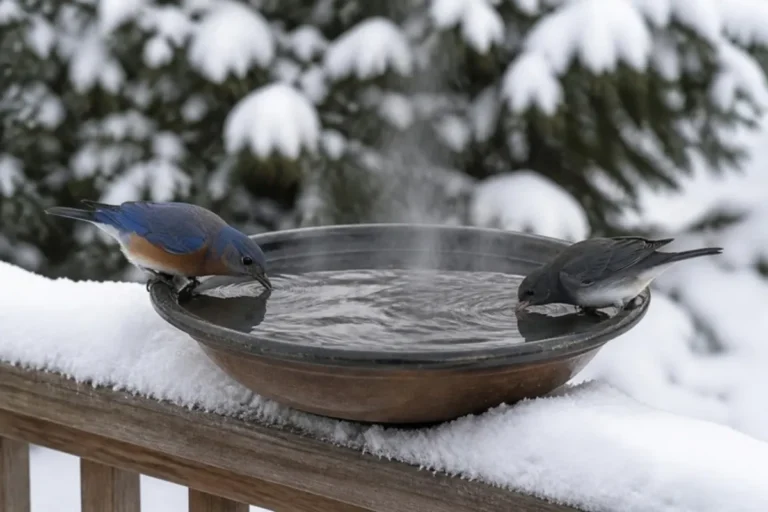 Winter WaterHeated baths that keep water open.Read
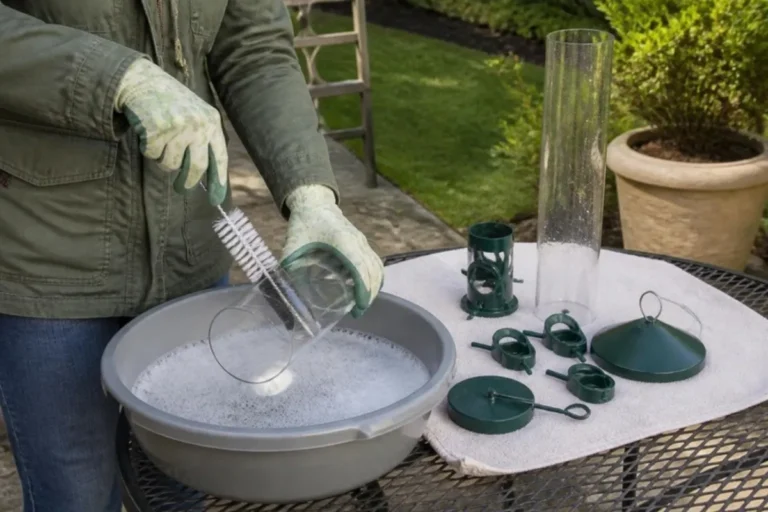 Clean FeedersA simple routine that keeps birds healthy.Read
 Bird baths worth considering
API Heated Bird Bath with Deck Mount (20 in)
API (Allied Precision Industries)
Best for: Keeping water open for birds through winter
- 150 W sealed heating element, thermostatically controlled
- Keeps water open down to about −20 °F (manufacturer rating)
- Mounts on a deck railing or existing pedestal
- UL-listed with a grounded plug
Keep in mind: Needs an outdoor-rated GFCI outlet nearby. Keep water shallow and fresh; heated baths still need regular cleaning.
API Heated Bird Bath with Stand (Model 970)
API (Allied Precision Industries)
Best for: A freestanding heated bath for the yard
- 150 W heater with built-in thermostat
- Manufacturer states water is kept around 40–50 °F
- 20-inch basin, 2 inches deep
- Includes a 30-inch metal stand
Keep in mind: Short power cord — plan for an outdoor-rated extension cord and GFCI outlet. Plastic basin is lighter and less decorative than stone.
Farm Innovators All Seasons 3-in-1 Heated Bird Bath
Farm Innovators
Best for: Small spaces and decks — lower wattage and flexible mounting
- 75 W thermostatically controlled heater
- Rated effective to about −10 °F
- Shallow 1-inch depth suits small birds
- Mounts on a deck rail, post or wall, or stands on legs
Keep in mind: Small 1-quart capacity needs frequent refilling. Lower-wattage heater is rated for milder cold than 150 W models.
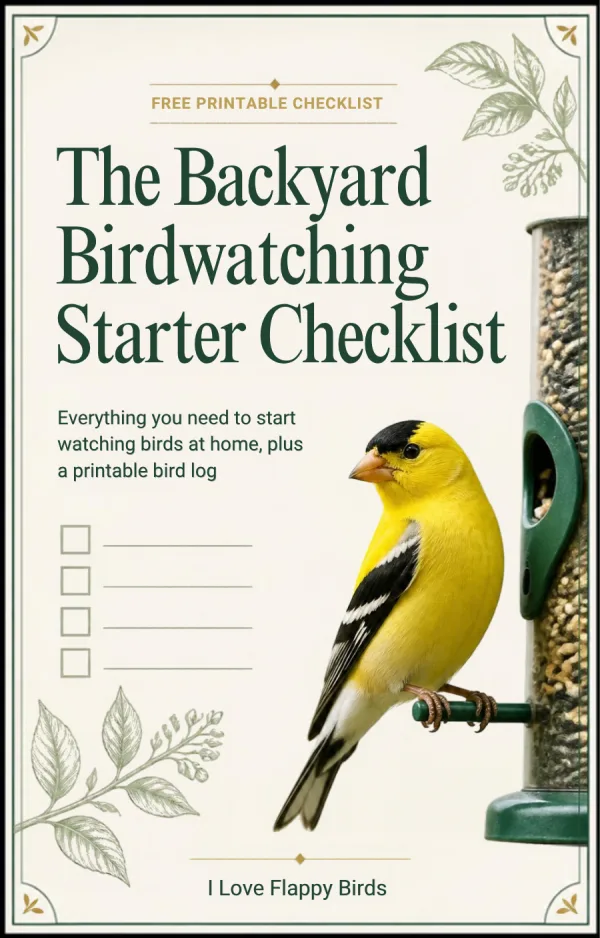
Free download
The Backyard Birdwatching Starter Checklist
A printable one-page checklist: choosing a feeder and seed, safe placement, water, cleaning, first IDs, binoculars and observation tips.