
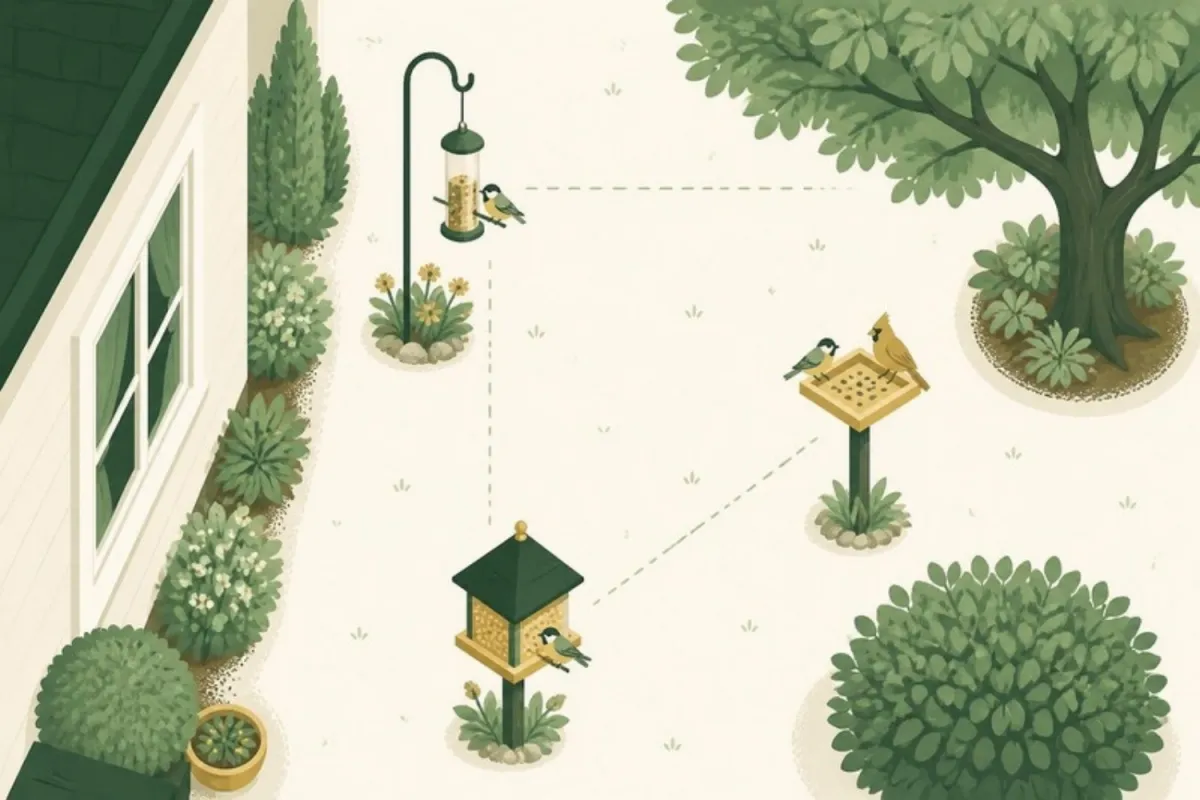
Good placement attracts more birds and keeps them safe. Follow these rules and you’ll avoid the most common problems: window strikes, cat attacks and squirrel takeovers.
1. Mind the windows: 3 feet or 30 feet
Window collisions kill a very large number of birds every year. Place feeders within about 3 feet of a window — so birds leaving the feeder can’t build up speed — or more than 30 feet away. Add markings to the outside of large windows (dot or line patterns spaced closely, screens or external films).
2. Near cover, but not too near
Birds want a quick escape route into shrubs or trees, but cats use the same cover to ambush. About 10 feet from dense shrubs is a good balance. Keep cats indoors.
3. Out of squirrel reach
- Mount on a pole about 5 feet up with a baffle beneath.
- Keep 8–10 feet from trees, fences and roofs squirrels can leap from.
- Or use a weight-activated feeder — see squirrel-proof feeders.
4. Where you can see it
Put feeders where you can enjoy them from indoors — the kitchen table or a favorite chair — and where refilling is easy year-round, including in snow.
5. Spread feeders out
Several feeders spaced apart reduce crowding and competition (and disease spread). Keep hummingbird feeders separate from seed feeders.
6. Know your local wildlife
In bear country, follow your state wildlife agency’s guidance; many advise removing feeders from spring through fall. During regional bird-disease outbreaks, follow official advice about pausing feeding.
Frequently asked questions
How high should a bird feeder be?
About 5 feet off the ground is a good default — high enough to deter many predators and squirrels on a baffled pole, low enough to refill.
Should feeders be in sun or shade?
Partial shade is ideal: it keeps seed and nectar fresher, while still letting you see birds clearly.