
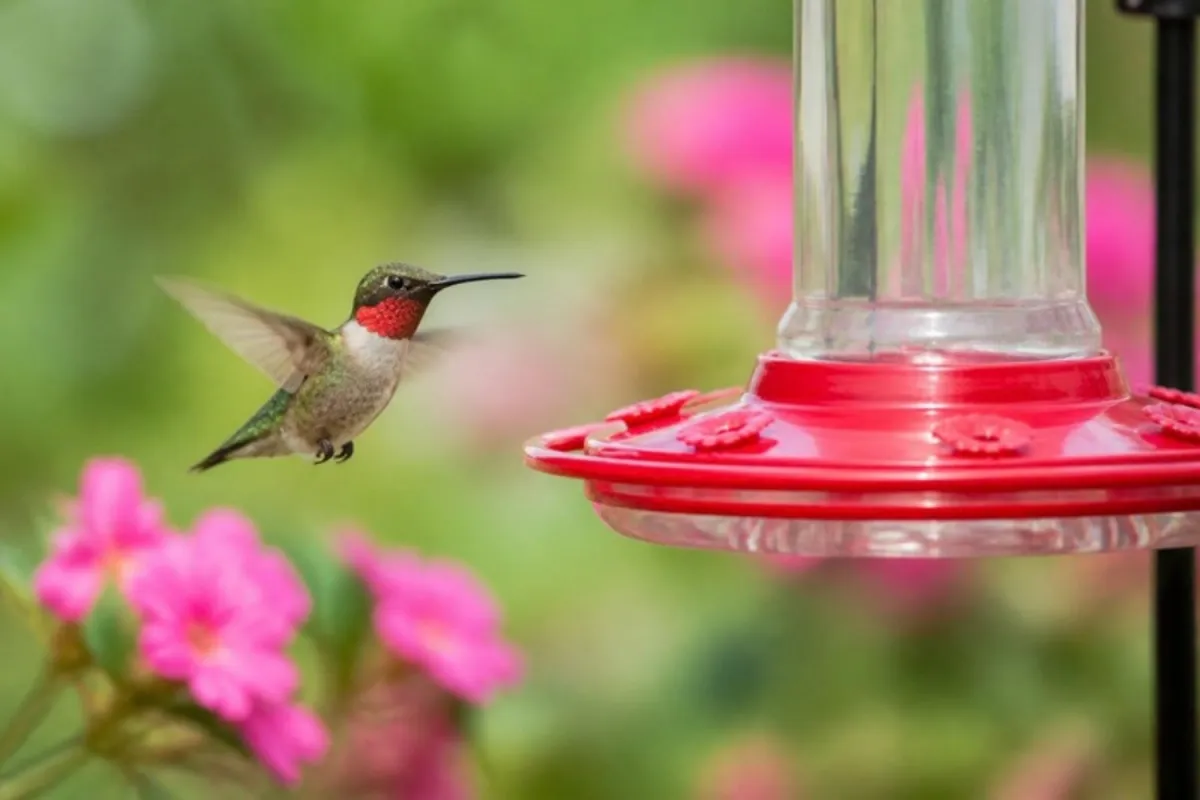
Hummingbird nectar spoils quickly in warm weather, so the best feeder is the one that’s easiest to keep clean. After that, capacity and ant protection matter most.
Last reviewed October 10, 2026 · Recommendations are based on manufacturer specifications, published product documentation and established birding guidance — not hands-on lab testing. Our editorial policy.
Quick picks
- Easiest to clean: Aspects HummZinger HighView
- Best for lots of hummingbirds: First Nature 32 oz (3055)
How we chose
We compared manufacturer specifications for ease of disassembly, ant moats, bee and wasp deterrence, capacity and materials. We haven’t lab-tested these feeders.
| Product | Best for | Key features | Considerations | Shop |
|---|---|---|---|---|
| Aspects HummZinger HighView 12 ozAspects | Low-maintenance hummingbird feeding — easy to clean and refill |
|
| Check Price (opens Amazon in a new tab) |
| First Nature 32 oz Hummingbird Feeder (3055)First Nature | Yards with lots of hummingbirds and budget-conscious buyers |
|
| Check Price (opens Amazon in a new tab) |
Our picks in detail
Easiest to clean Aspects HummZinger HighView 12 oz
Best for: Low-maintenance hummingbird feeding — easy to clean and refill
Nectar must be changed every few days in warm weather, so the easiest feeder to clean is often the best one. Saucer-style feeders like this have few parts, no hidden corners and a built-in moat for ants.
What stands out
- Saucer design with built-in ant moat
- Raised flower ports help divert rain
- Removable red cover for quick, thorough cleaning
- Raised perch gives an unobstructed view
Things to consider
- 12 oz may need daily refills in peak late-summer traffic.
- No bee guards on the ports — a saucer design keeps nectar below the ports, which helps.
Manufacturer specifications
- Capacity
- 12 oz
- Feeding ports
- 4
- Approx. size
- 8 W × 8.75 H × 2.5 D in
- Material
- UV-stabilized polycarbonate
- Mounting
- hang or post
Source: duncraft.com. Specifications can change between production runs — confirm on the product listing before you buy.
Best for lots of hummingbirds First Nature 32 oz Hummingbird Feeder (3055)
Best for: Yards with lots of hummingbirds and budget-conscious buyers
When dozens of hummingbirds compete in late summer, more ports reduce squabbling. The wide mouth makes cleaning easier than narrow-neck bottle feeders.
What stands out
- 10 feeding ports
- Wide-mouth reservoir and two-part base for filling and cleaning
- Built-in ant moat and bee/wasp-resistant design
- Made in the USA
Things to consider
- A large reservoir can spoil before it’s used — fill only partway in hot weather.
- More parts to clean than a saucer feeder.
Manufacturer specifications
- Model
- 3055
- Capacity
- 32 oz
- Feeding ports
- 10
- Approx. size
- 7 × 7 × 9.25 in
Source: www.treehelp.com. Specifications can change between production runs — confirm on the product listing before you buy.
The right nectar recipe
Mix 1 part plain white table sugar with 4 parts water. Stir until dissolved; boiling isn’t required, but let warm water cool before filling. Store extra in the refrigerator for up to about a week.
- No red dye — the red on the feeder is enough to attract hummingbirds.
- No honey, brown sugar, raw sugar or artificial sweeteners.
How often to clean
Change nectar and rinse the feeder every 2–3 days in hot weather, and about twice a week when it’s cooler — sooner if it looks cloudy. Scrub ports with a small brush. Avoid soap residue; rinse thoroughly. Read our feeder cleaning guide.
Tips to attract more hummingbirds
- Put feeders out around when hummingbirds usually arrive in your area (check eBird sightings).
- Hang feeders near flowers, in partial shade to slow spoilage.
- Use two or more feeders out of sight of each other to reduce territorial squabbles.
- Plant native nectar flowers — they provide insects too, which hummingbirds need.
- Keep feeders up a couple of weeks after your last sighting in fall; it won’t delay migration.
Frequently asked questions
Should I use red dye in hummingbird food?
No. It isn’t necessary, and wildlife organizations recommend plain sugar water. The feeder’s red parts attract hummingbirds.
How do I stop ants and bees?
Use a feeder with a built-in ant moat, keep it filled with fresh water, and choose a saucer design where nectar sits below the ports. Avoid oils or sticky products on hangers.
When should I take my hummingbird feeder down?
Leave it up a couple of weeks after you see the last hummingbird. Keeping feeders up doesn’t stop hummingbirds from migrating.