
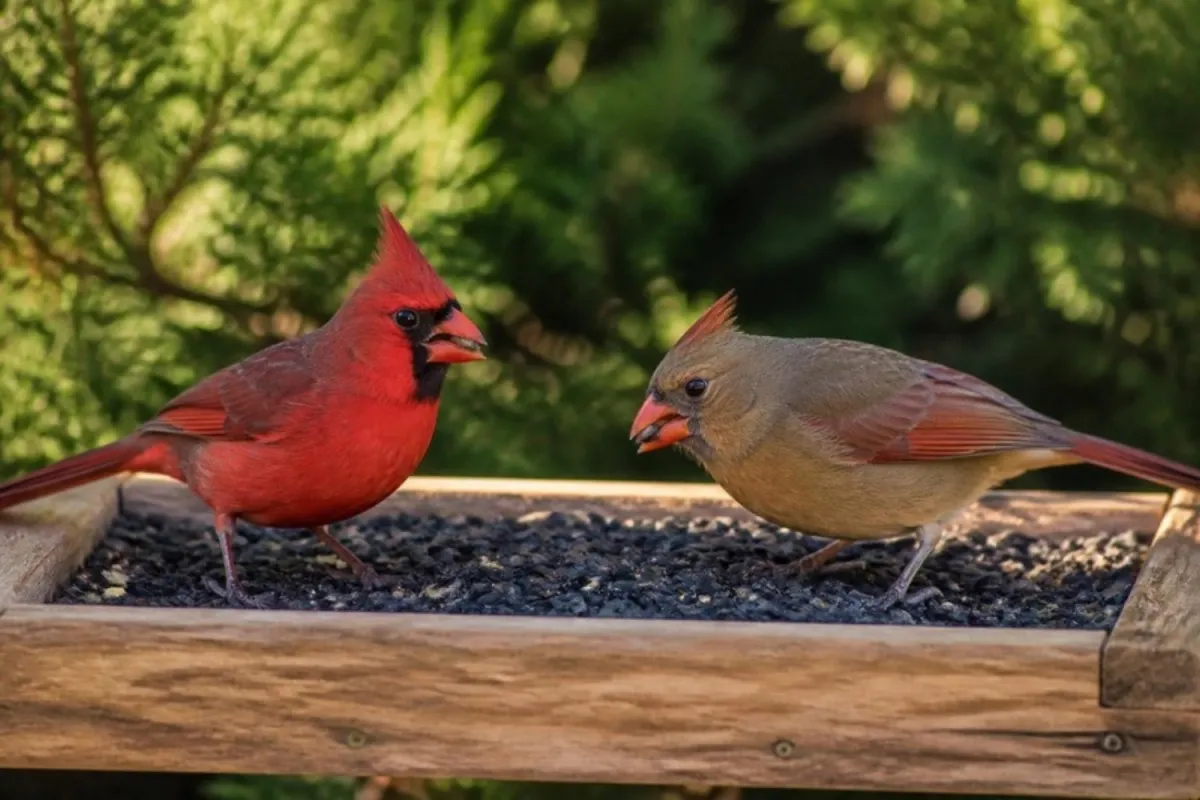
Northern cardinals don’t migrate, so once they adopt your yard you can enjoy them in every season — including against winter snow. They need four things: the right food, room to perch, dense cover and water.
First, are cardinals near you?
Northern cardinals live year-round across much of the eastern and central United States and parts of the Southwest, and their range has expanded northward over the past century. Check a range map, such as the one on the Cornell Lab’s All About Birds, or recent eBird sightings near you.
1. Offer their favorite foods
- Safflower seed — a cardinal favorite that squirrels and many blackbirds tend to ignore.
- Black-oil sunflower seed — high-fat and widely eaten.
- Hulled sunflower chips — easy to eat, no shells.
- Native shrubs with berries — dogwoods, serviceberry and others suited to your region provide natural food.
2. Give them room to perch
Cardinals like to face their food from a stable perch. Platform trays, hoppers with wide ledges and tube feeders with a perching ring suit them best. They’ll also feed on the ground under feeders.
See our picks: best bird feeders for cardinals.
Woodlink Audubon 3-in-1 Platform Feeder
Woodlink (Audubon series)
Best for: Cardinals, juncos, doves and other birds that prefer an open tray
- Open tray suits larger and ground-feeding birds
- Can be hung, post-mounted or used on the ground
- Powder-coated screen base drains rain
- Kiln-dried red cedar construction
Keep in mind: Open trays are easy for squirrels to reach unless you baffle the pole. Seed is exposed to weather — offer only what birds eat in a day or two and clean often.
Brome Squirrel Buster Plus
Brome Bird Care
Best for: Backyards with squirrels and birders who want cardinals at a tube feeder
- Weight-activated shroud closes the 6 feeding ports when a squirrel climbs on
- Included cardinal ring gives larger birds room to perch facing the food
- Large 5.1 lb seed capacity means fewer refills
- Seed ventilation system designed to help keep seed fresher
Keep in mind: Tall and fairly heavy when full — needs a sturdy hook or pole. Weight-activated feeders also exclude heavier birds such as doves and some jays; adjust expectations if you want them.
3. Provide dense cover
Cardinals feel safest near thick shrubs, hedges, vine tangles and evergreens, where they roost and nest. Place feeders about 10 feet from this cover so they can retreat quickly but cats can’t hide right beside the feeder.
4. Add water
A shallow bird bath, refreshed often, draws cardinals to drink and bathe. In freezing climates a heated bath keeps water available — see heated bird baths.
5. Make room for nesting
Cardinals rarely use nest boxes. They build cup nests in dense shrubs, often low to the ground. Avoid trimming thick shrubs during the nesting season, and keep cats indoors.
When to look for cardinals
Cardinals are often among the first birds at feeders in the morning and the last at dusk. Listen for their loud, clear whistled songs — both males and females sing.
Frequently asked questions
Do cardinals stay all winter?
Yes. Northern cardinals are non-migratory, so they rely on feeders, berries and shelter through the winter.
Why is a cardinal attacking my window?
During breeding season, a territorial cardinal may see its reflection as a rival. Break up the reflection on the outside of the glass; it usually stops after the season.
Do female cardinals sing?
Yes — female northern cardinals sing, sometimes from the nest.